
The Dangers of Distracted Driving: How a Few Seconds Can Change Everything
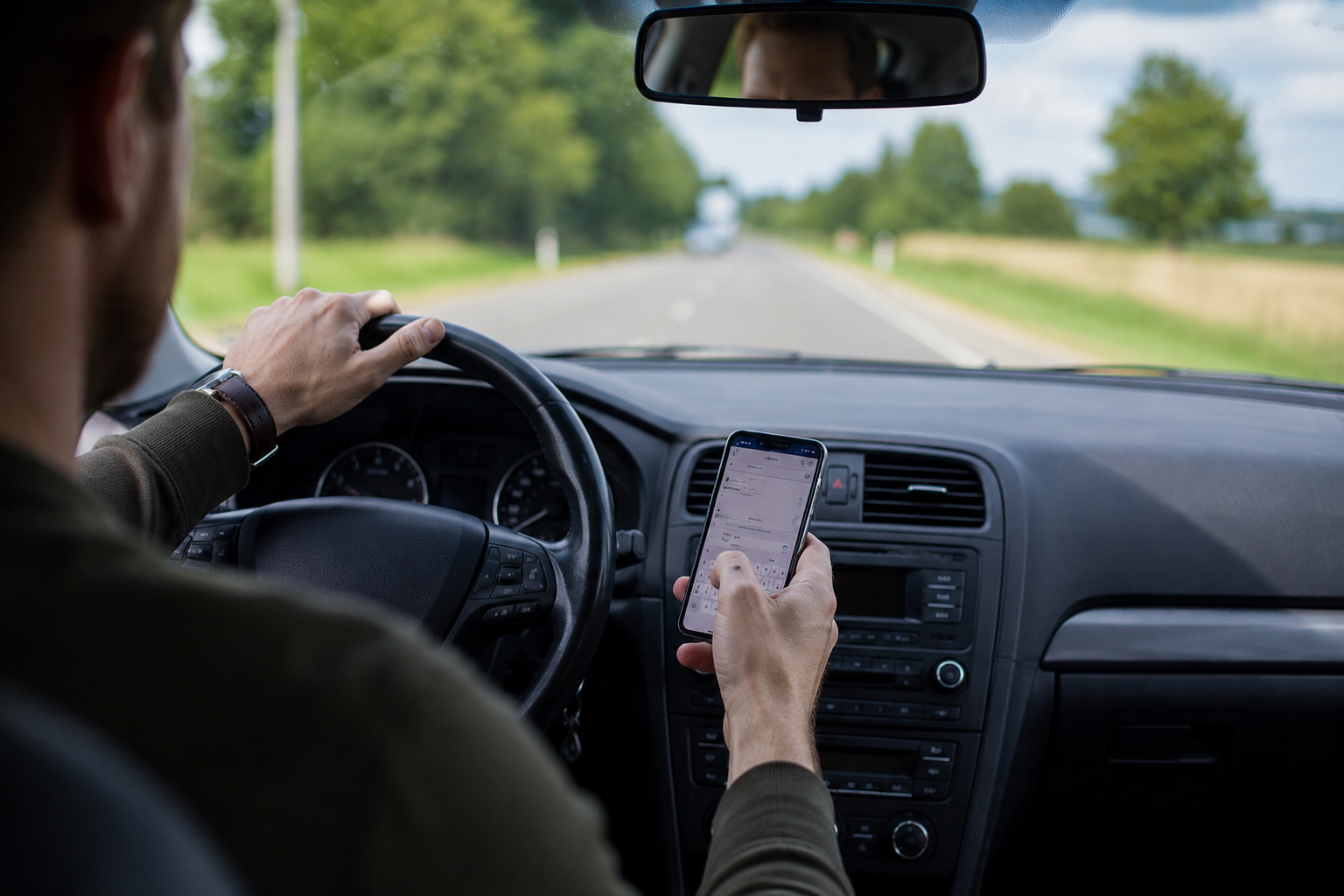
Distracted driving is one of the leading causes of traffic crashes, injuries, and fatalities in the United States. While many drivers recognize the dangers of texting behind the wheel, distraction takes many forms and affects drivers of all ages and experience levels.
A distracted driver may miss a traffic signal, fail to notice a pedestrian, drift into another lane, or react too slowly to avoid a collision. In many cases, a crash occurs because the driver's attention was diverted for only a few seconds.
Understanding the dangers of distracted driving is an essential part of defensive driving. By recognizing common distractions and learning strategies to manage them, drivers can improve awareness, reduce crash risk, and help create safer roads for everyone.
What Is Distracted Driving?
Distracted driving occurs whenever a driver's attention is diverted away from the task of driving.
Safe driving requires constant focus on:
The roadway
Other vehicles
Traffic signs and signals
Road conditions
Potential hazards
Anything that interferes with that attention can become a distraction.
According to the National Highway Traffic Safety Administration (NHTSA), distracted driving includes any activity that takes a driver's attention away from driving.
The Three Types of Driving Distractions
Most distractions fall into one or more of three categories.
Visual Distractions
Visual distractions cause a driver to take their eyes off the road.
Examples include:
Reading a text message
Looking at a navigation system
Watching an accident scene
Searching for an item inside the vehicle
Looking at passengers
Even a brief glance away from the roadway can have serious consequences.
Manual Distractions
Manual distractions involve taking one or both hands off the steering wheel.
Examples include:
Texting
Eating
Drinking
Adjusting vehicle controls
Reaching for objects
Reduced steering control can make it more difficult to react to sudden hazards.
Cognitive Distractions
Cognitive distractions occur when a driver's mind is focused on something other than driving.
Examples include:
Emotional stress
Daydreaming
Phone conversations
Intense discussions with passengers
Mental fatigue
A driver may appear attentive while still failing to process important information.
Why Distracted Driving Is So Dangerous
Driving is a complex activity that requires constant observation, decision-making, and control.
When attention is divided:
Reaction times increase
Hazard recognition decreases
Decision-making becomes less effective
Situational awareness declines
Even small distractions can dramatically reduce a driver's ability to respond to changing traffic conditions.
Defensive driving depends on continuous awareness. Distractions undermine that awareness and increase crash risk.
Texting While Driving
Texting is widely considered one of the most dangerous driving behaviors.
Texting combines:
Visual distraction
Manual distraction
Cognitive distraction
The driver is looking away from the road, using their hands for another task, and concentrating on the message.
At highway speeds, a vehicle can travel hundreds of feet while the driver's eyes are off the road.
Many drivers underestimate how much distance is covered during a few seconds of distraction.
Cell Phone Use and Driving
Many people believe hands-free devices completely eliminate distraction.
While hands-free technology removes some manual distraction, cognitive distraction can still remain.
Phone conversations may:
Reduce hazard awareness
Delay reaction times
Narrow attention
Increase mental workload
The safest approach is to minimize phone use while driving whenever possible.
Common Driving Distractions Beyond Phones
Cell phones receive significant attention, but many other distractions contribute to crashes.
Eating and Drinking
Consuming food or beverages while driving can:
Occupy one hand
Shift visual attention
Create unexpected spills
Vehicle Controls
Adjusting:
Climate controls
Audio systems
Navigation devices
can divert attention from traffic.
Passengers
Conversations with passengers may become distracting, especially when:
Emotions run high
Children require attention
Multiple people are speaking
Pets
Unrestrained pets can:
Move unexpectedly
Block visibility
Interfere with steering or pedals
Objects Inside the Vehicle
Searching for:
Phones
Bags
Documents
Sunglasses
often causes drivers to take their eyes off the road.
How Distractions Affect Reaction Time
Reaction time is critical in avoiding collisions.
A defensive driver constantly scans for:
Brake lights
Pedestrians
Merging traffic
Changing road conditions
Distractions delay the recognition of these hazards.
Even a one-second delay can dramatically increase stopping distance.
At 65 mph, a vehicle travels approximately 95 feet every second.
By the time a distracted driver notices a hazard, valuable time and distance may already be lost.
Distracted Driving and Defensive Driving
Defensive driving relies on anticipation.
Drivers must:
Scan ahead
Monitor mirrors
Observe traffic patterns
Maintain escape routes
Distractions weaken all of these abilities.
A distracted driver is less likely to:
Notice developing hazards
Predict the actions of others
Adjust speed appropriately
Maintain safe following distances
This is why distraction is often considered incompatible with defensive driving principles.
The Role of Situational Awareness
Situational awareness means understanding what is happening around the vehicle at all times.
This includes:
Traffic ahead
Vehicles behind
Adjacent lanes
Pedestrians
Cyclists
Road conditions
Distracted drivers often develop tunnel vision.
They focus on a secondary task and lose awareness of the broader traffic environment.
Reduced situational awareness is a major contributor to preventable crashes.
Distracted Driving and Young Drivers
Younger drivers often face unique distraction challenges.
Factors may include:
Inexperience
Frequent technology use
Peer influence
Overconfidence
Because newer drivers have less experience recognizing hazards, distractions can have an even greater impact on safety.
Defensive driving education helps young drivers build habits that prioritize attention and awareness.
Distracted Driving and Commercial Drivers
Commercial drivers face additional responsibilities due to:
Larger vehicle size
Longer stopping distances
Greater crash consequences
A momentary distraction in a commercial vehicle can affect many road users.
For this reason, distraction management is a major component of professional driver training programs.
Warning Signs of Distracted Driving
Drivers may not always recognize when they have become distracted.
Common signs include:
Missing exits
Drifting within a lane
Following too closely
Delayed braking
Missing traffic signs
Forgetting portions of a recent drive
These behaviors indicate reduced awareness and increased risk.
How to Prevent Distracted Driving
Put the Phone Away
Silence notifications before driving.
Store devices where they cannot be easily accessed.
Set Navigation Before Moving
Enter destinations before starting the trip.
Avoid making adjustments while driving.
Secure Loose Items
Place personal belongings where they will not shift during travel.
Manage Passengers
Keep conversations calm and avoid situations that compete for attention.
Focus on Driving
Driving should always remain the primary task.
Everything else is secondary.
Defensive Driving Tips for Eliminating Distractions
Effective defensive drivers:
Scan continuously
Check mirrors regularly
Keep both hands available for steering
Maintain safe following distances
Avoid multitasking
Plan ahead before beginning a trip
These habits help preserve attention and improve hazard recognition.
Frequently Asked Questions
Is texting while driving dangerous?
Yes. Texting combines visual, manual, and cognitive distraction, making it one of the most dangerous activities a driver can perform.
Are hands-free devices safe?
Hands-free devices reduce manual distraction but may still create cognitive distraction.
How many seconds of distraction are dangerous?
Even a few seconds can be enough to miss a critical hazard or travel hundreds of feet without monitoring the roadway.
What is the best way to avoid distracted driving?
Eliminate unnecessary tasks before driving and maintain full attention on the roadway throughout the trip.
Distracted driving remains one of the most preventable causes of traffic crashes. Whether the distraction comes from a phone, passenger, navigation device, food, or wandering thoughts, the result is the same: reduced awareness and increased risk.
Defensive driving requires continuous attention to the roadway and surrounding environment. By recognizing common distractions and actively working to eliminate them, drivers can improve reaction times, maintain situational awareness, and make safer decisions behind the wheel.
Every trip presents opportunities to choose focus over distraction. Those choices can help prevent crashes, injuries, and fatalities.
Sources
National Highway Traffic Safety Administration (NHTSA) – Distracted Driving
Centers for Disease Control and Prevention (CDC) – Distracted Driving Facts and Statistics
Federal Motor Carrier Safety Administration (FMCSA) – Driver Distraction Program
National Safety Council (NSC) – Distracted Driving Resources
AAA Foundation for Traffic Safety – Driver Distraction Research
Insurance Institute for Highway Safety (IIHS) – Distracted Driving Studies
State Driver Handbooks (California DMV, Texas DPS, Florida DHSMV, New York DMV)
Continue learning
Explore these related defensive driving resources: