
Signs of Driver Fatigue and When You Should Stop Driving
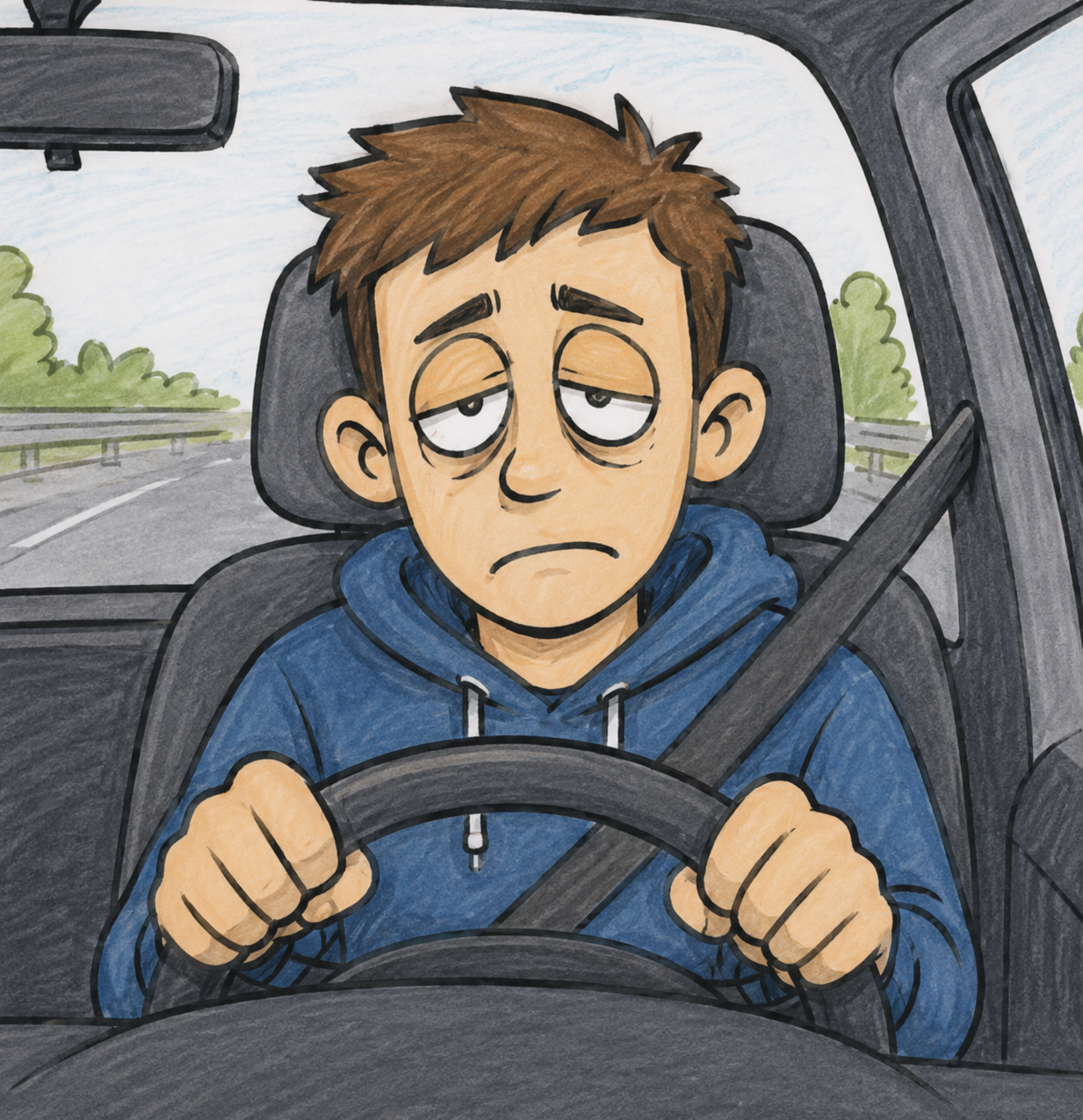
Driver fatigue is one of the most underestimated dangers on the road. Unlike speeding, distracted driving, or impaired driving, fatigue often develops gradually. Many drivers do not realize how tired they are until their reaction time slows, their judgment declines, or they briefly fall asleep behind the wheel.
Fatigue-related crashes can be particularly severe because drowsy drivers often fail to brake or take evasive action before impact. In some cases, a fatigued driver's performance can resemble that of an impaired driver, with reduced attention, slower reaction times, and poor decision-making.
Understanding the signs of driver fatigue and knowing when to stop driving are essential defensive driving skills. By recognizing early warning signs and taking appropriate action, drivers can reduce crash risk and improve safety for themselves and others.
What Is Driver Fatigue?
Driver fatigue is a state of physical or mental exhaustion that reduces a person's ability to operate a vehicle safely.
Fatigue affects:
Alertness
Concentration
Reaction time
Judgment
Situational awareness
Vehicle control
Fatigue can result from:
Lack of sleep
Long driving periods
Night driving
Irregular work schedules
Sleep disorders
Physical illness
Certain medications
Even drivers who feel "mostly awake" may experience significant performance impairments.
Why Fatigue Is Dangerous Behind the Wheel
Driving requires constant observation and decision-making.
Drivers must continuously:
Monitor traffic
Scan for hazards
Check mirrors
Maintain lane position
Adjust speed
Anticipate risks
Fatigue reduces a driver's ability to perform all of these tasks effectively.
Research has shown that sleep deprivation can impair driving performance similarly to alcohol impairment.
Fatigued drivers often:
Miss important visual cues
React more slowly
Make poor decisions
Experience lapses in attention
Drift from their lane
These effects increase crash risk significantly.
How Common Are Fatigue-Related Crashes?
Fatigue contributes to thousands of crashes every year.
Because drivers who fall asleep often cannot report what happened, experts believe fatigue-related crashes may be underreported.
Many drowsy-driving collisions occur:
Late at night
Early in the morning
During long-distance travel
On highways
On monotonous roads
The consequences can be severe because fatigued drivers may fail to brake before impact.
Early Signs of Driver Fatigue
Fatigue rarely appears suddenly.
Most drivers experience warning signs before reaching dangerous levels of drowsiness.
Recognizing these signs early allows drivers to take action before a crash occurs.
Frequent Yawning
Yawning is one of the most common indicators of fatigue.
Repeated yawning may suggest the body is struggling to maintain alertness.
Heavy Eyelids
Drooping eyelids often signal declining alertness.
Drivers may notice:
Difficulty keeping eyes open
Frequent blinking
Eye irritation
Blurred vision
These symptoms should never be ignored.
Difficulty Focusing
Fatigue reduces concentration.
Drivers may find themselves:
Missing road signs
Overlooking exits
Forgetting recent events
Losing track of traffic conditions
Reduced focus is often an early sign of dangerous fatigue.
Restlessness
Some fatigued drivers become physically restless.
They may:
Shift frequently in their seat
Adjust posture repeatedly
Open windows for fresh air
While these actions may temporarily increase comfort, they do not eliminate fatigue.
Advanced Signs of Driver Fatigue
As fatigue worsens, symptoms become more serious.
Drifting From Your Lane
One of the most dangerous warning signs is unintended lane drift.
Drivers may:
Touch lane markings
Cross lane boundaries
Make delayed steering corrections
Lane drifting often indicates severe fatigue.
Missing Traffic Signs or Signals
Fatigued drivers may overlook:
Stop signs
Speed limit signs
Traffic signals
Construction warnings
Missed information increases the likelihood of collisions.
Delayed Reactions
Reaction time slows significantly as fatigue increases.
Drivers may:
Brake later than normal
Miss opportunities to avoid hazards
Respond poorly to sudden changes
Delayed reactions can be especially dangerous at highway speeds.
Difficulty Maintaining Speed
Fatigue may affect speed control.
Drivers sometimes:
Slow unintentionally
Vary speed without realizing it
Drive significantly below traffic flow
These changes may indicate declining alertness.
Microsleeps: The Most Dangerous Fatigue Symptom
A microsleep is a brief, involuntary episode of sleep that may last only a few seconds.
During a microsleep:
The driver is effectively unconscious
Hazard recognition stops
Vehicle control may be lost
At highway speeds, a vehicle can travel hundreds of feet during a microsleep.
Many fatigue-related crashes occur because drivers experience microsleeps without realizing it.
Common Causes of Driver Fatigue
Understanding fatigue causes helps drivers manage risk more effectively.
Insufficient Sleep
Lack of sleep is the most common cause of driver fatigue.
Most adults require approximately seven to nine hours of sleep per night.
Sleep debt accumulates over time and can significantly impair performance.
Long Driving Periods
Extended driving can create mental and physical fatigue.
Hours of continuous attention place demands on the brain and body.
Night Driving
Human alertness naturally declines during nighttime hours.
Driving during normal sleeping periods increases fatigue risk.
Shift Work
Workers with irregular schedules often experience disruptions to normal sleep patterns.
These disruptions can increase drowsy-driving risk.
Sleep Disorders
Medical conditions such as sleep apnea can reduce sleep quality and increase daytime fatigue.
Drivers who experience persistent tiredness should consult a healthcare professional.
When Driver Fatigue Is Most Likely
Certain times of day present greater fatigue risk.
Late Night Hours
Many fatigue-related crashes occur between midnight and 6:00 a.m.
This period corresponds with the body's natural sleep cycle.
Mid-Afternoon
Alertness often decreases during the afternoon.
Many people experience increased drowsiness between approximately 1:00 p.m. and 4:00 p.m.
Long Highway Trips
Monotonous road environments can accelerate fatigue.
Long stretches of highway provide fewer stimuli, making it easier for alertness to decline.
How Fatigue Affects Defensive Driving
Defensive driving relies on:
Hazard recognition
Situational awareness
Prediction
Quick decision-making
Fatigue weakens all of these abilities.
A fatigued driver is less likely to:
Notice hazards early
Maintain safe following distances
Anticipate the actions of others
Keep an escape route available
This reduction in awareness increases collision risk.
When Should You Stop Driving?
Many drivers ask how tired is "too tired."
The answer is simple:
If you notice fatigue symptoms, it is time to stop and evaluate your condition.
Drivers should strongly consider stopping if they:
Struggle to keep their eyes open
Cannot remember recent miles traveled
Drift from their lane
Miss traffic signs
Experience repeated yawning
Feel mentally disconnected from driving
Waiting for fatigue to improve on its own is rarely effective.
What To Do If You Become Fatigued While Driving
Pull Over Safely
The safest response is to stop driving.
Locate:
A rest area
A parking area
A service station
Another safe location
Switch Drivers
If another qualified driver is available, consider changing drivers.
Stay Hydrated
Dehydration may worsen feelings of fatigue.
Avoid Continuing Out of Convenience
Many fatigue-related crashes occur because drivers believe they are close enough to their destination to continue safely.
Unfortunately, fatigue does not disappear simply because the trip is nearly complete.
Common Myths About Driver Fatigue
"I Can Push Through It"
Fatigue affects judgment.
Many tired drivers underestimate their level of impairment.
"Fresh Air Solves Fatigue"
Opening a window may provide temporary stimulation but does not eliminate fatigue.
"Coffee Makes Me Safe to Drive"
Caffeine may temporarily improve alertness, but it is not a substitute for adequate sleep.
"I Have Driven Tired Before"
Past success does not guarantee future safety.
Fatigue-related crashes often occur without warning.
Tips for Preventing Driver Fatigue
Defensive drivers take steps to reduce fatigue risk before a trip begins.
Get Adequate Sleep
Prioritize sufficient rest before long drives.
Plan Breaks
Stop approximately every two hours during extended trips.
Avoid Driving During Sleep Hours
When possible, schedule travel during normal waking hours.
Share Driving Duties
On long trips, rotate drivers when available.
Recognize Warning Signs Early
Early intervention is one of the best ways to prevent fatigue-related crashes.
Driver fatigue is a serious safety hazard that affects reaction time, awareness, judgment, and vehicle control. Because fatigue often develops gradually, many drivers fail to recognize how impaired they have become until dangerous symptoms appear.
By learning the signs of driver fatigue, understanding when fatigue is most likely to occur, and knowing when to stop driving, motorists can reduce crash risk and make safer decisions on the road.
Defensive driving begins with awareness. Recognizing fatigue and taking action before it becomes dangerous is one of the most important safety decisions a driver can make.
Sources
National Highway Traffic Safety Administration (NHTSA) – Drowsy Driving
Centers for Disease Control and Prevention (CDC) – Drowsy Driving
National Safety Council (NSC) – Fatigued Driving
AAA Foundation for Traffic Safety – Drowsy Driving Research
Federal Motor Carrier Safety Administration (FMCSA) – Driver Fatigue Prevention
National Sleep Foundation – Sleep and Driving Safety
State Driver Handbooks (California DMV, Texas DPS, Florida DHSMV, New York DMV)
Continue learning
Explore these related defensive driving resources: