
How Rain Affects Stopping Distance: What Every Driver Should Know
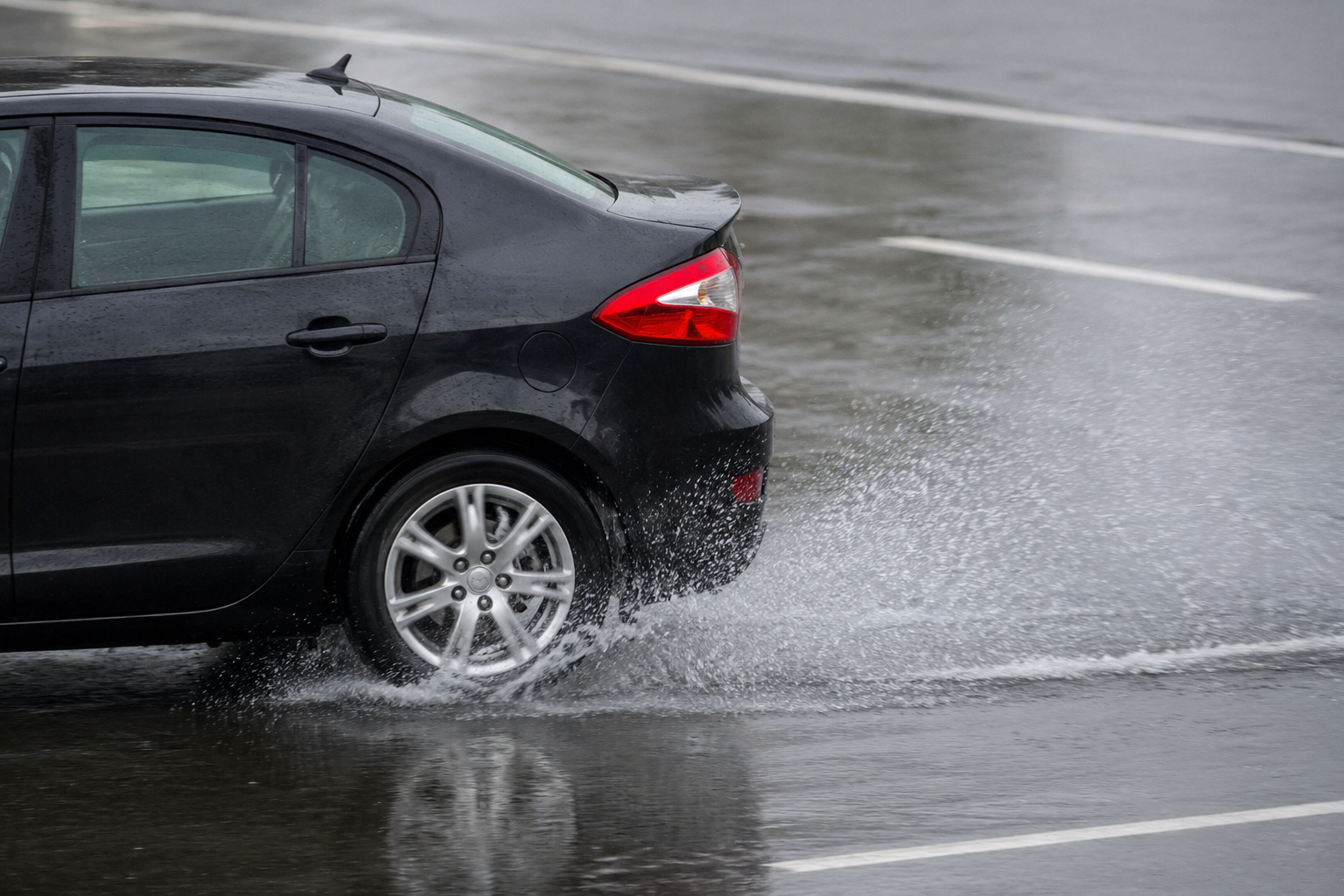
Rain is one of the most common weather conditions drivers encounter, yet many people underestimate its impact on vehicle control and stopping distance. Even a light rain can significantly reduce traction, increase braking distance, and make it more difficult to avoid hazards.
Understanding how rain affects stopping distance is an essential part of defensive driving. Drivers who recognize the risks of wet roads can adjust their speed, following distance, and braking habits to reduce the likelihood of a crash.
In this guide, we'll explain why stopping distances increase in rainy conditions, what factors influence wet-weather braking performance, and how drivers can stay safe when roads become slippery.
What Is Stopping Distance?
Stopping distance is the total distance a vehicle travels from the moment a driver recognizes a hazard until the vehicle comes to a complete stop.
Stopping distance consists of two parts:
Reaction Distance
Reaction distance is the distance traveled while a driver:
Notices a hazard
Processes the information
Decides how to respond
Moves their foot to the brake pedal
Even alert drivers require time to react.
Braking Distance
Braking distance begins when the brakes are applied and ends when the vehicle stops completely.
Road conditions, tire traction, vehicle speed, and brake performance all influence braking distance.
When roads are wet, braking distance increases because tires cannot grip the pavement as effectively.
Why Rain Increases Stopping Distance
The primary reason rain increases stopping distance is reduced traction.
Vehicle tires rely on friction between the tire tread and road surface. Water creates a thin barrier that decreases this friction.
As traction decreases:
Tires generate less grip
Braking becomes less effective
Steering response is reduced
Skid risk increases
The result is a longer distance needed to stop safely.
How Much Does Rain Increase Stopping Distance?
Exact numbers vary depending on:
Vehicle type
Tire condition
Road surface
Rain intensity
Vehicle speed
However, many transportation safety organizations warn that stopping distances on wet roads can be significantly longer than on dry pavement.
For example:
Speed | Dry Road (Approx.) | Wet Road (Approx.) |
30 mph | 75-100 ft | 100-130 ft |
50 mph | 175-225 ft | 250-300 ft |
70 mph | 325-400 ft | 450-550+ ft |
These estimates demonstrate why drivers should reduce speed during rain events.
A vehicle traveling at highway speed may require hundreds of additional feet to stop safely.
The First Rain Is Often the Most Dangerous
Many drivers assume heavy rain creates the greatest danger.
In reality, the first rainfall after a dry period is often particularly hazardous.
Oil, fuel residue, dirt, and dust accumulate on road surfaces over time.
When rain first begins:
Water mixes with these contaminants
Roads become unusually slippery
Traction can drop dramatically
Until rainfall washes contaminants away, stopping distances may increase significantly.
How Tire Traction Changes in Rain
Tires are responsible for maintaining contact with the road surface.
Only a relatively small portion of each tire touches the pavement at any moment.
When rainwater covers the road:
The contact patch becomes less effective
Water reduces friction
Grip decreases
Tread design helps channel water away from the tire.
As tread depth decreases, the tire becomes less capable of maintaining traction.
Why Tread Depth Matters
Worn tires are especially dangerous in rain.
Reduced tread depth:
Increases hydroplaning risk
Reduces braking performance
Lowers steering responsiveness
Drivers should regularly inspect tire tread and replace tires before they become excessively worn.
Hydroplaning and Loss of Control
One of the most serious wet-weather hazards is hydroplaning.
Hydroplaning occurs when:
Water accumulates on the road
Tires cannot evacuate water quickly enough
The vehicle rides on top of the water layer
When hydroplaning occurs:
Steering effectiveness is greatly reduced
Braking effectiveness decreases
Drivers may temporarily lose control
Hydroplaning can occur even when roads appear only moderately wet.
Risk factors include:
High speeds
Worn tires
Standing water
Poor tire pressure
Why Speed Has a Greater Effect in Rain
Speed always affects stopping distance.
However, speed becomes even more critical when traction is reduced.
At higher speeds:
Tires have less time to move water away
Hydroplaning risk increases
Braking distances grow dramatically
Many crashes occur because drivers maintain dry-weather speeds during rainstorms.
Reducing speed is one of the most effective ways to improve safety on wet roads.
Following Distance in Rain
Safe following distance becomes especially important during rainy weather.
Under ideal conditions, many defensive driving programs recommend maintaining at least three seconds of following distance.
In rain, drivers should increase this gap.
Many experts recommend:
Four to six seconds in moderate rain
Even greater distances in heavy rain
Additional space provides:
More reaction time
More braking distance
Greater flexibility for evasive action
How Vehicle Maintenance Affects Wet-Weather Stopping Distance
Proper vehicle maintenance plays a major role in wet-road safety.
Tire Maintenance
Drivers should regularly check:
Tread depth
Tire pressure
Uneven wear
Visible damage
Brake Maintenance
Brake systems should be inspected periodically.
Key components include:
Brake pads
Rotors
Brake fluid
Brake lines
Suspension Components
Worn suspension parts can reduce tire contact with the road.
Reduced contact means less traction and longer stopping distances.
Defensive Driving Strategies for Rainy Conditions
Defensive drivers adapt their behavior to changing weather conditions.
Reduce Speed
Lower speeds improve:
Tire traction
Steering control
Braking effectiveness
Increase Following Distance
Extra space allows more time to react and stop safely.
Avoid Sudden Inputs
Abrupt actions can overwhelm available traction.
Drivers should:
Brake smoothly
Accelerate gradually
Steer gently
Scan Farther Ahead
Early hazard recognition is critical.
Looking farther down the road provides more time to:
Identify hazards
Adjust speed
Plan escape routes
Use Headlights
Headlights improve visibility and help other road users see your vehicle.
Common Wet-Weather Driving Mistakes
Many drivers unknowingly increase risk during rain.
Common mistakes include:
Driving Too Fast
Excessive speed remains one of the leading contributors to wet-road crashes.
Following Too Closely
Tailgating eliminates the extra space needed for increased stopping distances.
Ignoring Tire Condition
Worn tires dramatically reduce wet-road performance.
Braking Aggressively
Hard braking can cause skids and loss of control.
Using Cruise Control
Cruise control can delay a driver's response during traction loss events.
Frequently Asked Questions
Does rain double stopping distance?
Not always, but stopping distance can increase significantly depending on road conditions, tire quality, and vehicle speed.
How much should I slow down in rain?
Drivers should reduce speed enough to maintain control and account for reduced traction. Exact reductions depend on weather severity and roadway conditions.
Are wet roads more dangerous than snowy roads?
Both conditions present unique hazards. Many drivers underestimate rain because it is common, but wet-road crashes occur frequently due to reduced traction and increased stopping distances.
Can new tires improve stopping distance in rain?
Yes. Tires with adequate tread depth generally provide better wet-weather traction and hydroplaning resistance.
Rain affects stopping distance by reducing traction between tires and the road. As roads become wet, vehicles require more distance to brake safely, and the risk of hydroplaning increases.
Drivers who understand these effects can make better decisions by reducing speed, increasing following distance, maintaining their vehicles, and applying defensive driving principles.
Safe driving in rain begins with recognizing that wet roads change how a vehicle behaves. By adjusting early and driving proactively, motorists can reduce crash risk and improve safety for everyone on the road.
Sources
National Highway Traffic Safety Administration (NHTSA) – Rain, Floods and Wet Roads Safety
Federal Highway Administration (FHWA) – Road Weather Management Program
National Safety Council (NSC) – Driving in Rain and Wet Conditions
AAA Foundation for Traffic Safety
Federal Motor Carrier Safety Administration (FMCSA) Driver Safety Resources
State Driver Handbooks (California DMV, Texas DPS, Florida DHSMV, New York DMV)
Michelin Tire Safety Research and Wet Traction Guidance
Continue learning
Explore these related defensive driving resources: